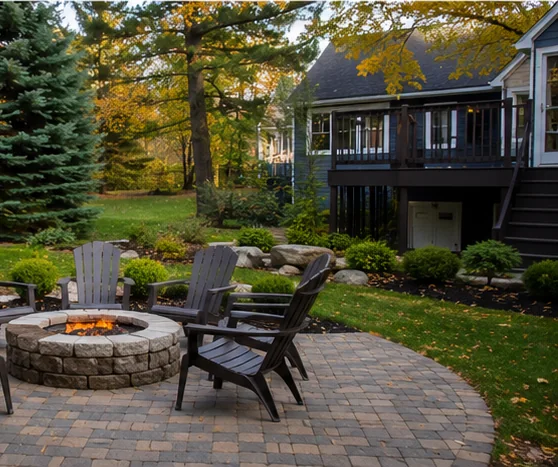
new construction home in Glencoe
A brand-new home in Glencoe should be the easiest house you ever own — but "new" does not always mean "flawless." On the prairie west of the Twin Citi
A brand-new home in Glencoe should be the easiest house you ever own — but "new" does not always mean "flawless." On the prairie west of the Twin Cities, builders work fast through short framing seasons, subcontractors rotate between sites, and the small details that protect a home for thirty years are exactly the ones that get rushed at the end. A new construction inspection is your independent, third-party look at the home before you sign off, separate from the city's code inspection and separate from the builder's own walkthrough. We work for you — not the builder, the lender, or the listing agent — and we put what we find in plain English so you can hand the builder a clear punch list while there is still leverage to fix it. Reports are delivered in 24 hours.
Why a new home in Glencoe still needs an inspection
City and county code inspections confirm a home meets minimum requirements at key stages — footings, framing, rough-in. They are spot checks, not a complete top-to-bottom review of the finished house. By the time drywall, siding, flooring, and trim go on, a lot is hidden. Out here on the McLeod County prairie, crews often juggle several builds at once across Glencoe, Brownton, Stewart, and Hutchinson, and the last 10 percent of a project — caulking, flashing, grading, final hookups — is where corners get cut to hit a closing date. An independent inspection catches the missed items a busy builder and a stretched-thin city inspector can both overlook. You are paying full price for a finished product; this is how you verify you got one.
Grading, drainage, and prairie soils
Glencoe and the surrounding farmland sit on flat-to-gently-rolling glacial and prairie soils that hold water and drain slowly. On a fresh build, the lot has just been disturbed, backfilled, and rough-graded — and final grade is one of the most commonly shortchanged items on a new home. We look at whether the ground slopes away from the foundation on all sides, whether downspouts and any drain tile actually carry water away from the house instead of dumping it at the corners, and whether window wells are protected. Backfill around a new basement settles over the first year or two; if the grade was left flat or pitched back toward the house, that settling can park snowmelt and spring rain right against the foundation. Getting this right before you close is far cheaper than chasing a wet basement later.
Well, septic, and the rural edge
Inside Glencoe proper you'll typically be on city water and sewer, but new homes on the rural edges, acreages, and farmstead lots around McLeod County often have a private well and an on-site septic system. These are major systems that a standard code inspection does not evaluate for performance. We check the visible, accessible components — well cap and wiring, pressure tank and pump cycling, and the visible condition and layout of the septic tank and drainfield area where we can safely access them. We will tell you plainly where a dedicated, licensed well-water test or a separate septic compliance inspection is the right call. On a brand-new system you want documentation that it was permitted, sized, and signed off correctly before you rely on it for the next several decades.
The building envelope: flashing, ice dams, and a cold-climate winter
Central Minnesota winters are long and hard, and a new home's defense against them is built — or skipped — in details you can't see from the curb. We look closely at the envelope: flashing at windows, doors, decks, and roof-to-wall transitions; kick-out flashing where roofs meet sidewalls; proper step flashing; and whether the roof was installed with ice-and-water shield at the eaves and valleys, which Minnesota homes need to fight ice dams. Inadequate attic insulation and poor attic ventilation are common new-build shortcuts that let heat escape, melt snow unevenly, and form ice dams that back water under the shingles. We also check siding gaps, missing caulk, and unsealed penetrations where wind-driven prairie weather and air leakage get in. These are easy fixes now and expensive repairs once they've leaked through a finished wall.
Mechanical systems, electrical panel, and radon
A new furnace, water heater, electrical panel, and ventilation system should be installed cleanly — but 'should' is why you inspect. We confirm the furnace and any AC are properly connected, vented, and condensate-drained; that the panel is neatly wired, correctly labeled, and free of double-tapped or loose breakers; and that GFCI and AFCI protection is present where required and actually works. We run plumbing fixtures to check for leaks, drainage, and proper venting, and verify that bath and kitchen exhaust fans vent to the exterior rather than into the attic. McLeod County is in a high-radon region of Minnesota, and many new homes are built with passive radon-resistant features. We note whether a radon system is in place and recommend a radon test, since new construction does not guarantee a safe level — only testing does.
Cosmetic finish, punch list, and your builder warranty
The visible quality of trim, flooring, paint, doors, and cabinetry tells you how much care went into the whole project. We document the cosmetic and functional defects worth putting on your builder punch list — sticking doors, miscut trim, gaps, scratched or cracked finishes, missing hardware, drywall flaws — alongside the system-level findings. Just as important: most builders offer a one-year workmanship warranty, and an 11-month warranty inspection before that window closes is the smart follow-up. Items that hide during the first walkthrough — settling cracks, a furnace that struggles its first winter, grading that shifts — surface over that first year, and a documented inspection report gives you the leverage to have them corrected on the builder's dime.
What we watch for
- Final grade and backfill settling that pitches water back toward a new foundation on slow-draining prairie soil
- Roof flashing, ice-and-water shield, and attic insulation and ventilation that prevent Minnesota ice dams
- Window, door, and roof-to-wall flashing and unsealed exterior penetrations against wind-driven weather
- Private well components and septic tank/drainfield condition on rural and farmstead lots outside town
- Electrical panel labeling, double-tapped or loose breakers, and working GFCI/AFCI protection
- Furnace and water heater venting, condensate drainage, and exhaust fans that vent fully to the exterior
- Plumbing leaks, drainage, and proper venting at every run-in fixture
- Presence and effectiveness of radon-resistant features, confirmed only by an actual radon test
- Builder punch-list cosmetic and workmanship defects to resolve before closing and again before the warranty expires
Closing on a new build in Glencoe or anywhere across McLeod County? Get an independent set of eyes before you sign. Call us to schedule your new construction inspection, or build a free instant quote online in under a minute. Reports delivered in 24 hours — clear, honest, and written for you.
Run Your Instant QuoteMore by type.
See your price in under a minute.
Build your quote and book your Glencoe-area inspection online — or call (507) 721-0818.