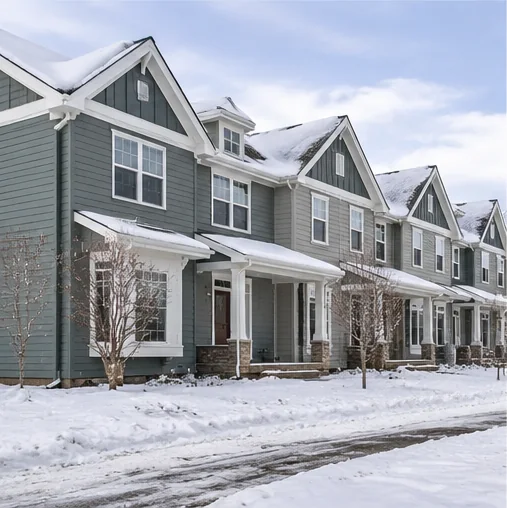
older downtown home in Glencoe
An older downtown home in Glencoe carries a different set of questions than a newer build on the edge of town. As the county seat of McLeod County, Gl
An older downtown home in Glencoe carries a different set of questions than a newer build on the edge of town. As the county seat of McLeod County, Glencoe grew up around its historic commercial core, and many of the homes a few blocks off the main streets date to the railroad era and the first decades of the twentieth century. These are characterful houses on compact city lots, often with deep front porches, plaster walls, and full basements dug into central Minnesota prairie soil. They also tend to have layered histories: a fuse panel swapped for breakers, a coal furnace replaced once or twice, a kitchen modernized in a way that left old wiring buried behind it. Our job is to read those layers honestly so you know what you are buying. We inspect to InterNACHI Standards of Practice, explain findings in plain English, and deliver a full written report within 24 hours so you can make a confident decision rather than a hopeful one.
Foundations, framing, and prairie-soil settlement
Downtown Glencoe homes were typically built before poured-concrete foundations became standard, so it is common to find fieldstone, rubble, brick, or early block walls in the basement. These foundations can serve well for another century, but they need honest evaluation. We look for crumbling mortar joints, bowed or leaning walls, past tuckpointing, and the kind of stair-step cracking that points to ongoing movement rather than old, stable settlement. Many of these houses use balloon framing, where wall studs run unbroken from the sill to the roofline, which affects both fire behavior and how additions were tied in. Central Minnesota's prairie soils expand and contract with moisture and deep frost, so we pay close attention to grading, downspout discharge, and any signs that water is being directed toward the foundation rather than away from it. We tell you whether what we see is cosmetic, worth monitoring, or worth a structural opinion before you close.
Aging city service connections and original plumbing
A downtown home is almost always on Glencoe municipal water and sewer, which is a real advantage over a rural well and septic system. The catch is age. The sewer lateral connecting the house to the city main may be original clay or cast iron, both of which are vulnerable to root intrusion, cracking, and bellies that slow drainage. Inside, we frequently find galvanized supply lines that have corroded and narrowed over decades, reducing water pressure and eventually leaking, sometimes mixed in with newer copper or PEX where a previous owner did a partial update. We run fixtures, check drainage, look under sinks and in the basement for active leaks and prior repairs, and note where original materials remain. Where a sewer line raises concern, we will recommend a specialized camera scope so a buried surprise does not become your first homeownership expense.
Layered electrical: fuses, knob-and-tube, and partial rewires
Few systems tell a home's story like its wiring. Many older Glencoe houses started with knob-and-tube wiring and a fuse panel, and over the years owners added circuits, converted to breakers, and updated the kitchen or bathroom without touching everything behind the walls. The result is often a mix of vintages in one house. We open the panel to check for adequate capacity, proper breakers, double-tapped connections, and amateur work. We look for surviving knob-and-tube, ungrounded two-prong outlets, missing GFCI protection near water, and the kind of overloaded extension-cord habits that older homes invite simply because they have too few outlets. None of this means a house is unsafe to buy, but it shapes your budget and your insurance conversation, and you deserve to know about it before, not after.
Heating systems, ductwork, and ice dams
Glencoe winters are long and cold, so the heating system matters more here than almost anywhere. Older downtown homes have often cycled through several furnaces, and we sometimes find aging units near the end of their service life, an oversized older furnace, or a former gravity system retrofitted with a blower. We check the furnace age, operation, venting, and heat exchanger condition where accessible, and we note water heaters that are corroding or vented improperly. Because these homes frequently have under-insulated attics and tight original soffits, they are prone to ice dams, where snowmelt refreezes at the eaves and forces water back under the shingles. We look at attic insulation and ventilation, signs of past ice-dam staining on ceilings and exterior trim, and roof condition, so you understand both the immediate repairs and the comfort upgrades that pay off through a central Minnesota winter.
Radon and era-typical materials
Radon is common throughout McLeod County and the surrounding prairie, and older homes with stone or block foundations, sump pits, and unsealed basement floors can allow it to accumulate in living space, especially in finished lower levels. Radon is invisible and odorless, and the only way to know your level is to test, which we can arrange. We also flag the era-typical materials that come with the territory: likely lead-based paint on original woodwork and siding, possible asbestos in old pipe insulation, vermiculite, or floor tile, and original single-pane or early storm windows. We do not test for these hazardous materials destructively, but we identify what is consistent with the home's age and point you toward the right specialist when something warrants closer evaluation. The goal is informed ownership, not alarm.
What we watch for
- Fieldstone, rubble, brick, or early block foundations with failing mortar, bowing, or active movement
- Original clay or cast-iron sewer laterals prone to root intrusion, plus corroded galvanized supply lines
- Mixed-vintage wiring: surviving knob-and-tube, fuse panels or partial breaker conversions, and ungrounded outlets
- Aging furnaces and water heaters, improper venting, and heat-exchanger concerns
- Under-insulated attics, poor eave ventilation, and ice-dam staining at ceilings and trim
- Balloon framing and how additions or remodels were tied into the original structure
- Radon potential in stone or block basements and finished lower levels
- Era-typical materials: likely lead paint, possible asbestos pipe wrap or tile, and original windows
- Grading, gutters, and downspouts directing water toward the foundation on compact city lots
Buying or selling an older home in downtown Glencoe? Get a thorough, plain-English inspection with a full written report in 24 hours. Call us to talk through the property, or build your free instant quote online in about a minute and book a time that works for you.
Run Your Instant QuoteMore by type.
See your price in under a minute.
Build your quote and book your Glencoe-area inspection online — or call (507) 721-0818.