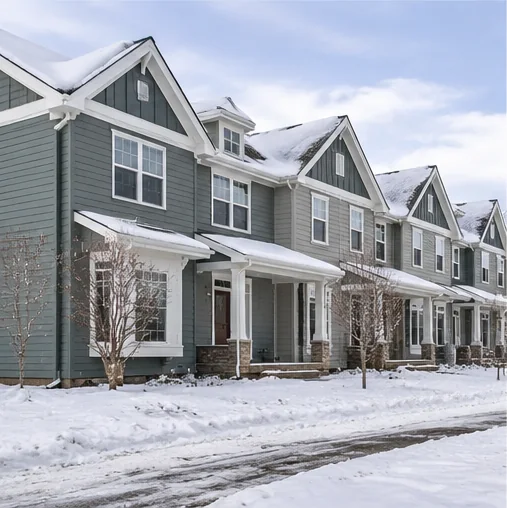
rambler in Glencoe
The rambler, or single-story ranch, is one of the most common homes you'll tour in Glencoe and across McLeod County. From the established neighborhood
The rambler, or single-story ranch, is one of the most common homes you'll tour in Glencoe and across McLeod County. From the established neighborhoods near downtown and the South Fork Crow River to the farmsteads and acreages out toward Brownton and Stewart, the long, low single-level layout has been a prairie favorite for decades. It is easy to live in, easy to age in place, and generally easy to maintain. But a rambler's strengths also shape the way it can fail. The wide footprint means a lot of roof and a lot of foundation perimeter exposed to central Minnesota weather, and many of these homes are now 40 to 70 years old, carrying original or once-updated systems that deserve a careful look. This page walks through what we specifically watch for when we inspect a rambler in the Glencoe area, in plain English, so you know what you're buying before you sign. Reports are delivered within 24 hours.
The wide roof and the ice-dam problem
A rambler spreads a large, low-slope roof over a single story, and that geometry matters in a Minnesota winter. Long eave runs and shallow pitches give snow more room to sit and melt unevenly, which is exactly how ice dams form along the eaves and over unheated additions or attached garages. We look for the telltale signs: stained or rotted soffits and fascia, granule loss and curling on south- and west-facing slopes, and water staining on attic sheathing or along interior ceilings near exterior walls. Because the attic is shallow and the whole roof sits close to the living space, we also check insulation depth and attic ventilation. Many older Glencoe ramblers were built with modest insulation and blocked or missing soffit vents, and that combination is the root cause of most ice-dam and condensation problems we find. Knowing the roof's age, remaining life, and ventilation health up front lets you budget honestly instead of being surprised the first hard winter.
Foundation, slab, and prairie soils
A single-story home puts a long foundation perimeter in contact with the ground, and the soils around Glencoe and the wider Crow River valley can hold a lot of seasonal moisture. We walk the full basement or crawlspace looking for horizontal and stair-step cracking in block walls, signs of inward bowing, efflorescence (the white mineral powder left by water), and rust lines that hint at past flooding. On slab-on-grade ramblers, we check for settlement cracks, uneven floors, and moisture wicking up at the slab edge. Outside, we look at grading and downspout discharge, because flat lots and short downspouts let snowmelt and spring rain pool against the wall. Sump pumps are common here, so we test the pump and note whether there's a backup. None of this is alarmist; it's about separating normal age-related cracking from active water intrusion that needs attention.
Well and septic on rural and edge-of-town lots
Inside Glencoe city limits most homes are on municipal water and sewer, but ramblers on acreages and farmsteads at the edges of McLeod County frequently run on a private well and an on-site septic system. These are major systems that a standard home inspection does not fully evaluate, and we are clear about that. We'll note the visible condition of the well head, pressure tank, and any obvious plumbing concerns, and we'll point out the location and visible components of the septic where we can. But we strongly recommend a separate, specialized well water test and a licensed septic (SSTS) compliance inspection before closing on any rural property. Minnesota has specific point-of-sale septic rules, and a failed or non-compliant system is an expensive surprise. We help you understand what's a home-inspection item versus what needs a dedicated rural-systems professional.
Aging furnaces, water heaters, and the radon question
Ramblers in this area often still carry older mechanicals tucked into a utility room or basement corner. We check the age and condition of the furnace, look for cracked or corroded heat exchangers where visible, confirm proper venting, and flag furnaces that are near or past their expected service life. We do the same for the water heater, watching for rust at the base, improper venting, and missing or non-functioning temperature-and-pressure relief valves. Because so much of a rambler's living space sits directly on the basement or slab, radon deserves real attention. Central Minnesota, including McLeod County, sits in a high-radon part of the state, and a single-level home means occupied rooms are close to the soil gas entry points. We recommend radon testing on every rambler and can explain how testing and, if needed, a mitigation system works.
Electrical panels and decades of updates
A 50- or 60-year-old rambler has usually had electrical work done in layers: the original service, a remodel, a finished basement, a new garage circuit. We open the panel to check for the kinds of issues that age and DIY work produce, such as undersized service for today's loads, double-tapped breakers, aluminum branch wiring from the era when it was common, and federal-brand panels with a poor safety reputation. We test a representative sample of outlets for proper wiring and grounding and confirm GFCI protection in kitchens, baths, garages, and exterior locations. In an older single-story home it's also common to find too few outlets, missing smoke and carbon-monoxide alarms, and open junction boxes in the attic or basement. These are usually correctable, and knowing about them lets you plan and price the work rather than discover it later.
Windows, attached garages, and everyday livability
Beyond the big systems, we look at the parts of a rambler you'll touch every day. Original single-pane or early double-pane windows are common in older Glencoe homes and are a real source of heat loss and condensation; we note failed seals, rot at sills, and operation problems. Attached garages get special attention because the firewall between the garage and living space, the self-closing door, and proper sealing all matter for safety. We also check the long interior layout for sagging floors, doors that won't latch, and signs of past settlement, plus the bathrooms and kitchen for the slow plumbing leaks that quietly damage cabinets and subfloor. The goal is a complete, honest picture of the home, not a list of scare items.
What we watch for
- Ice-dam history at eaves, plus attic insulation depth and soffit ventilation
- Block-foundation cracking, bowing, efflorescence, and active basement water
- Sump pump operation and whether a backup exists
- Roof age, slope wear, and condition of soffit and fascia
- Furnace and water-heater age, venting, and visible heat-exchanger condition
- Electrical panel issues: federal-brand panels, double-taps, aluminum wiring, GFCI gaps
- Radon entry risk given the single-level, ground-contact footprint
- Well, pressure tank, and visible septic components on rural and edge lots
- Window seal failure, sill rot, and garage-to-living-space firewall integrity
Buying or selling a rambler in Glencoe or anywhere in McLeod County? Call us to talk through your specific home, or build a free instant quote online in about a minute. We'll give you a clear, honest inspection and your full report within 24 hours.
Run Your Instant QuoteMore by type.
See your price in under a minute.
Build your quote and book your Glencoe-area inspection online — or call (507) 721-0818.