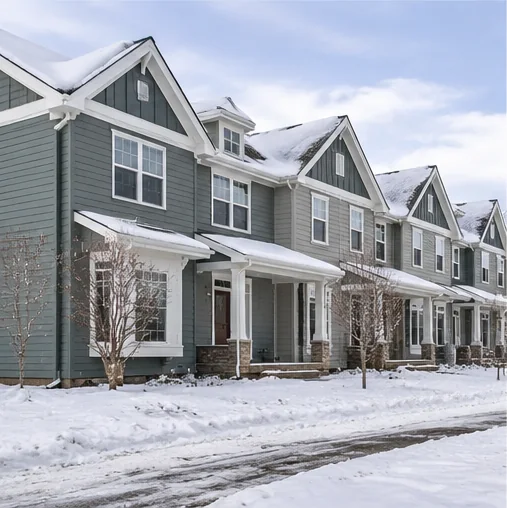
farmhouse in Glencoe
Farmhouses are part of the fabric of Glencoe and the surrounding McLeod County prairie. Some sit on tree-lined lots in town near the historic Main Str
Farmhouses are part of the fabric of Glencoe and the surrounding McLeod County prairie. Some sit on tree-lined lots in town near the historic Main Street and the US Route 212 corridor; others stand on working or former farmsteads out on the section roads west and south of the city, surrounded by row crops and shelterbelts. Many were built between the late 1800s and the mid-1900s, then added onto, re-wired, and re-heated by one generation after another. That long history is exactly what makes a farmhouse a different inspection than a newer suburban home. The original framing, foundation, and well-and-septic systems were built to the standards of their day, and decades of patches sit on top of them. This page explains what a careful, type-specific inspection of a Glencoe-area farmhouse actually looks at, in plain language, so you know what you are buying before you sign.
Old Foundations on Heavy Prairie Soils
The soils around Glencoe are not the fast-draining sand you find closer to the metro's river valleys. McLeod County sits on rich, heavy clay and loam, the same ground that makes this such productive farm country. Clay holds water, swells when wet, and shrinks when it dries out, and it heaves when it freezes deep in a Minnesota winter. That seasonal movement works on an old foundation year after year. Many Glencoe-area farmhouses were built on fieldstone or rubble-stone foundations, sometimes laid up with lime mortar that has since washed out or crumbled to sand. Others have early poured walls or block. We walk the full perimeter and the basement or cellar looking for bowing, leaning, stair-step and horizontal cracking, displaced stones, and gaps where mortar has failed. We check support posts and beams, the condition of the sill where wood meets stone, and any signs of past or active water entry. In a dirt-floor cellar or shallow crawl we look at moisture, vapor barriers, and rot. The goal is to tell you honestly whether you are seeing old, stable movement that has long since settled or an active problem you will need to budget for.
Balloon Framing, Additions, and the Original Structure
Older farmhouses are often balloon-framed, meaning the wall studs run continuously from the foundation up to the roof in a single, tall length. It was a sound way to build, but those uninterrupted wall cavities act like chimneys for fire and air movement when fire-stopping was never added, so we note where blocking is missing. A century-old farmhouse has also usually grown over time: a kitchen ell, a back porch enclosed into a mudroom, a bedroom wing, an attached garage. Each addition was built in a different decade to different standards, and the seams between old and new are where problems hide. We look at how additions tie into the original structure, whether rooflines and floors have settled at the connections, and whether porch and entry roofs are pulling away. We check the attic for sagging or undersized rafters, prior repairs, and signs of past leaks. Wood-destroying insects and long-term moisture take a toll on framing this old, so we look closely at sills, rim joists, and any wood near grade or near where water has historically run.
Private Well and Septic on Rural Parcels
Farmhouses on the edges of Glencoe and out in the county are usually not on city water and sewer. They draw from a private well and dispose of waste through a septic system, and these are two of the most important and most expensive systems on a rural property. A standard home inspection is visual and does not certify a well or a septic system, so we tell you plainly what we can and cannot see and we point you to the right specialists. For the well, we recommend water testing for bacteria such as coliform and E. coli and for nitrates, which matter in farm country where fertilizer is used on surrounding fields; we note the visible wellhead, pressure tank, and pump behavior. For the septic system, we look for surface evidence of the tank and drainfield, soggy ground, odors, or slow drains, and we strongly recommend a separate inspection and pump-out by a licensed septic professional, and confirmation that the system is a compliant, non-failing system, before you close. On older farmsteads we also watch for abandoned cisterns, hand-dug wells, and pits that were never properly sealed.
Aging Wiring, Panels, and Heating
The systems inside a Glencoe farmhouse often span several eras at once. We regularly find knob-and-tube wiring or early cloth-sheathed wiring still energized in older homes, sometimes alongside modern circuits, and fuse panels or undersized electrical service that no longer matches how families use power today. We flag Federal Pacific (FPE) Stab-Lok and Zinsco panels when we find them, because both have well-documented histories of breakers that fail to trip, and we report any of these conditions honestly as items warranting evaluation by a licensed electrician rather than overstating them. Heating tells a similar story. Many farmhouses have been converted from their original wood, coal, or oil heat to a newer furnace or boiler, and we routinely see aging units near the end of their service life. We inspect for cracked heat exchangers to the extent they are visible, proper venting and combustion air, backdrafting, and rust at the flue. Where an old fuel-oil tank was once used, we watch for a buried or abandoned tank in the yard or an unused tank in the basement, which can be an environmental and cost concern that a buyer deserves to know about.
Roof, Attic, Ice Dams, and Radon
Glencoe winters are long and the prairie wind has nothing to slow it down, so an old farmhouse's roof and envelope take a beating. Layered roofs are common on homes this age, with new shingles laid over old, and we document the roof type, apparent age, and any storm bruising, granule loss, lifted shingles, or failing flashing at chimneys and valleys. Steep original farmhouse roofs and cold, under-insulated attics are a recipe for ice dams, where snowmelt refreezes at the eaves and forces water back under the shingles, so we check attic insulation depth, ventilation, and the telltale staining on sheathing and at ceiling-wall joints. Thin original wall and attic insulation also means high heating bills and cold rooms, and we note where it can be improved. Finally, McLeod County has elevated radon, and radon moves easily up through basement floors, stone foundations, and dirt cellars. Radon is the leading cause of lung cancer among non-smokers, so we recommend a radon measurement test on any farmhouse here, and if a mitigation system is already in place we recommend confirming it actually works.
What we watch for
- Fieldstone and rubble-stone foundations with washed-out mortar, bowing, or settlement
- Frost heave and shrink-swell movement from heavy McLeod County clay and loam soils
- Knob-and-tube or cloth wiring, fuse panels, and undersized electrical service
- Federal Pacific (FPE) Stab-Lok and Zinsco panels that warrant electrician evaluation
- Private well condition plus recommended water testing for bacteria and nitrates
- Septic tank and drainfield evidence, with a licensed septic inspection before closing
- Buried or abandoned fuel-oil tanks and unsealed old wells common on farmsteads
- Balloon framing without fire-stopping, plus settlement where additions meet the original home
- Ice dams, layered roofs, thin attic insulation, and elevated radon
Buying or selling a farmhouse in Glencoe or out on the McLeod County prairie? Get a clear, honest, type-specific inspection from an InterNACHI Master Inspector who understands old homes, private wells, and septic systems, with your full report delivered in 24 hours. Call us with questions, or build your free instant quote online in under a minute and see exactly what your inspection includes.
Run Your Instant QuoteMore by type.
See your price in under a minute.
Build your quote and book your Glencoe-area inspection online — or call (507) 721-0818.