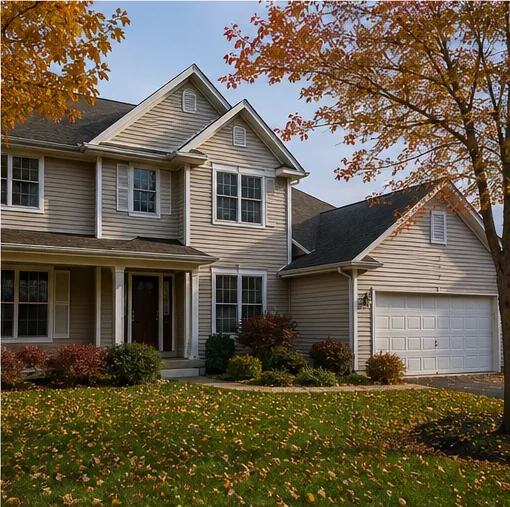
Buying an Older Home in Glencoe: An Inspection Guide
What to know before buying one of Glencoe's century-old or early-1900s homes.
Glencoe sits in the heart of McLeod County, on the central Minnesota prairie roughly an hour west of the Twin Cities along Highway 212. It is a town of solid older housing stock: pre-war frame homes near downtown and the county seat district, mid-century ranches and split-levels, and farmsteads scattered out toward Brownton, Stewart, Plato, and the Buffalo Creek bottoms. Buying an older home here can be a genuine bargain compared to the metro, but prairie weather, aging mechanical systems, and rural well-and-septic setups all hide costs that a listing photo will never show. This guide walks through what actually matters when you inspect and buy an older Glencoe-area home, so you can negotiate from knowledge instead of hope.
In this guide
Understanding Glencoe's Older Housing StockWells, Septic, and Rural Water on Glencoe's EdgesPrairie Soils, Foundations, and Basement MoistureRadon: A Near-Certainty on the Minnesota PrairieAging Furnaces, Electrical Panels, and Winter SystemsRoofs, Ice Dams, and the Prairie ElementsUnderstanding Glencoe's Older Housing Stock
Glencoe's housing tells the story of a railroad and farming town that grew in waves. Close to downtown and around the older residential grid you'll find frame homes from the late 1800s through the 1930s, many with stone or rubble foundations, balloon-framed walls, and additions tacked on over decades. The postwar boom added solid one-story ranches and 1960s-70s split-levels, and the rural edges toward Brownton, Plato, and the township roads hold true farmsteads with outbuildings, barns, and well-and-septic infrastructure. Each era carries its own predictable issues. The oldest homes often have knob-and-tube remnants, undersized 60-amp services, galvanized supply lines, and basements that were never meant to be living space. Mid-century homes may hide a single layer of insulation, original cast-iron drain stacks, and the first generation of forced-air furnaces. When you tour an older Glencoe home, ask the seller for the build date and the dates of every major update: roof, furnace, electrical panel, water heater, well pump, and septic. Verbal claims of 'newer' mean little. An inspection confirms what was actually done versus what was painted over, and that distinction is where your negotiating leverage lives.
Wells, Septic, and Rural Water on Glencoe's Edges
In town, Glencoe homes are on municipal water and sewer, which simplifies things considerably. But the moment you look at properties on the rural edges, on township roads, or at a farmstead, you are buying a private well and an on-site septic system, and both are major-dollar items that fall entirely on you after closing. Minnesota law requires a compliant septic system at the time of property transfer in most cases, so insist on a current compliance inspection from a licensed SSTS inspector and read the actual report, not just the seller's summary. Older farmsteads sometimes have undersized, non-conforming, or even abandoned cesspools and drainfields that fail inspection and require a replacement system that can run well into five figures. On the well side, ask for the well record, test the water for coliform bacteria and nitrates (prairie ag country means nitrate is a real concern), and consider arsenic, which shows up in parts of central Minnesota groundwater. Check the age and condition of the pressure tank and well pump, look for an intact, properly capped wellhead, and ask whether any old wells on the property were sealed. A failed septic or a contaminated well can erase the savings that drew you out of the metro in the first place.
Prairie Soils, Foundations, and Basement Moisture
The flat-to-rolling prairie ground around Glencoe and the Buffalo Creek and Crow River drainages brings its own foundation concerns. Many older homes sit on soils with significant clay content, which expands when wet and shrinks in drought, working seasonally against foundation walls and footings. In the oldest homes you may find stone, brick, or early poured foundations that have settled, bowed, or developed stair-step cracks over a century of freeze-thaw cycles. Combine clay soil with Minnesota's hard frost line and you get foundations that move. Inside, look hard at the basement: efflorescence (white mineral staining), a musty smell, rust lines on stored items, sump pump activity, and patched cracks all point to a moisture history. Outside, check that grading slopes away from the house and that downspouts and any drain tile actually carry water away rather than dumping it at the foundation. Properties near low spots, creek bottoms, or with a high water table are especially prone to seasonal seepage and spring snowmelt intrusion. A bowing wall or a chronic wet basement is repairable, but it is expensive and it belongs in your offer math, not your surprise list.
Radon: A Near-Certainty on the Minnesota Prairie
Radon is not an exotic risk in this part of Minnesota; it is the default assumption. The Minnesota Department of Health reports that the large majority of counties test high, and central and southern Minnesota prairie ground is firmly in elevated-radon territory. Radon is a naturally occurring radioactive gas that seeps up from the soil through foundation cracks, sump pits, and slab penetrations, and it is the leading cause of lung cancer among non-smokers. The only way to know an individual home's level is to test it, because two houses on the same street can read very differently depending on soil, foundation tightness, and how the home is operated. For an older Glencoe home, a short-term radon test during your inspection period is inexpensive insurance, and the action level is 4.0 pCi/L. If the home reads high, a properly installed sub-slab depressurization mitigation system is a well-understood, moderately priced fix, and it is entirely reasonable to ask the seller to install one or credit you for it. Don't skip the test because the house 'seems fine'; radon is colorless and odorless, and seeming fine is exactly how it works.
Aging Furnaces, Electrical Panels, and Winter Systems
Glencoe winters are long and genuinely cold, so the heating and electrical systems in an older home are not optional comforts, they are life-safety and budget items. Many older homes still run original or first-replacement forced-air furnaces; a furnace past roughly 15 to 20 years is living on borrowed time, and an aging unit warrants a heat-exchanger check for cracks that can leak carbon monoxide. Confirm there are working CO detectors. On the electrical side, watch for undersized 60-amp services, fuse boxes, and certain problem panel brands from the mid-century era that insurers and inspectors flag for safety reasons; an older farmstead may also have a patchwork of subpanels feeding outbuildings. Knob-and-tube or cloth-sheathed wiring in the oldest homes is a real consideration for both safety and insurability. Also look at the water heater age, the condition of any LP/propane tank and lines common on rural properties, and whether the home has enough insulation and air sealing to survive a prairie cold snap affordably. Ice dams, covered next, are downstream of these same insulation and ventilation questions.
Roofs, Ice Dams, and the Prairie Elements
Open prairie around Glencoe means wind, blowing snow, hail, and dramatic freeze-thaw swings, and the roof takes the brunt of all of it. On an older home, ask the age of the roof and look for the telltale signs an inspection confirms: curling or missing shingles, granule loss collecting in gutters, soft or stained decking, and prior hail bruising that can affect both lifespan and an insurance claim. Just as important is what happens at the eaves in winter. Ice dams form when heat escaping into an under-insulated, under-ventilated attic melts snow that refreezes at the cold eave, backing water up under the shingles and into walls and ceilings. Stained ceilings near exterior walls, ice-damaged soffits, and damaged gutters are clues the home has fought ice dams before. The fixes, more attic insulation, better air sealing, and proper soffit-to-ridge ventilation, overlap directly with the heating-cost and comfort concerns above, so improvements pay off twice. Also inspect flashing, chimney condition (older homes often have unlined or deteriorating masonry chimneys), and any additions where two roof lines meet, which are classic leak points.
Quick checklist
- Get documented dates for the roof, furnace, electrical panel/service size, water heater, well pump, and septic, not just verbal 'newer' claims
- On rural properties, require a current SSTS septic compliance inspection and a well water test for coliform bacteria, nitrates, and arsenic
- Schedule a short-term radon test during your inspection period and budget for a mitigation system if it reads at or above 4.0 pCi/L
- Inspect the basement and foundation for efflorescence, bowing walls, stair-step cracks, sump activity, and a musty moisture history
- Confirm furnace age and heat-exchanger condition, working CO detectors, and adequate service capacity (watch for 60-amp services and fuse boxes)
- Check for knob-and-tube, cloth-sheathed wiring, or flagged vintage panels that may affect safety and home insurance
- Evaluate the roof for age, hail damage, and ceiling stains near eaves that signal past ice dams from poor attic insulation and ventilation
- Verify grading slopes away from the home and that downspouts and drain tile carry water clear of the foundation, especially near low spots or creek bottoms
- Inspect any LP/propane tank and lines, outbuildings, and subpanels common on farmsteads
- Put confirmed major repairs into your offer math so they become negotiation points, not closing-day surprises
An older Glencoe or McLeod County home can be a smart, affordable buy when you go in with eyes open, and a costly mistake when you don't. Before you sign, let us give the home an honest, plain-English inspection covering the roof, foundation, mechanicals, radon, and the rural well-and-septic questions that matter out here on the prairie. Call us to schedule, or build your free instant quote online in about a minute and lock in your inspection date before your contingency clock runs out.
Run Your Instant QuoteSee your price in under a minute.
Build your quote and book your Glencoe-area inspection online — or call (507) 721-0818.